


How to Buy a Gun: A Step-by-Step Guide for First-Time Buyers
October 19, 2026
By Russ Abston, Gun Shop Supervisor
Buying your first firearm is an exciting step, but navigating options, local laws, and technical gear can feel overwhelming. Whether you are considering a firearm for home defense, everyday concealed carry, target shooting, or hunting, making a safe and confident choice starts with asking the right questions. This guide walks you through the key self-evaluations to make before entering a shop, plus the specific questions to ask your dealer to ensure you walk out with the right fit.
 Step 1: Questions to Ask Yourself Before Shopping
Before stepping into a gun store, you need to establish a clear baseline of your goals and limitations.
What is Your Main Purpose for Owning a Firearm?
Every firearm is engineered with a specific purpose in mind. A firearm that excels at home defense may be entirely unsuitable for everyday concealed carry.
- Home Defense: Look for reliability, ease of use under stress, and a capacity or caliber that stops a threat without excessive risk of over-penetration through house walls. Full-size handguns, shotguns, or pistol-caliber carbines are common choices.
- Concealed Carry (CCW): Prioritize size, weight, and concealability. Compact or sub-compact pistols are engineered specifically for this.
- Target Shooting / Plinking: Look for firearms with low ammunition costs and minimal recoil, such as those chambered in .22 Long Rifle (.22LR), which allow for affordable, extended practice sessions.
- Hunting: The choice depends strictly on the game. Shotguns are used for waterfowl and small game, while rifles are required for large game.
What is Your True “Total Cost of Ownership” Budget?
The price tag on the firearm is only a fraction of the initial cost. When setting your budget, you must account for the “total cost of ownership,” which includes:
- Mandatory background check fees or permit costs.
- At least 200–500 rounds of practice ammunition and defensive ammunition.
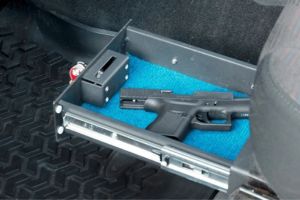
- A high-quality holster or secure home storage (such as a quick-access safe).
- Eye and ear protection.
- Cleaning kits and lubricants.
How Will You Safely Store It?
Safe storage is a fundamental responsibility of gun ownership. You must decide on a storage solution before bringing the weapon home. Ask yourself:
- Do I have children or unauthorized individuals living in or visiting my home?
- Do I need rapid access to the firearm at night?
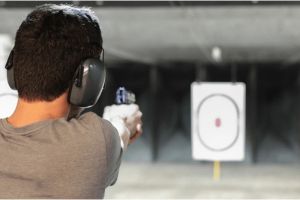 Step 2: Key Questions to Ask Your Firearm Dealer
When you enter a Federal Firearms License (FFL) dealership, the staff are there to help. However, you should ask targeted questions to cut through sales pitches and find the right fit.
Which Caliber Fits Your Experience Level?
Caliber refers to the internal diameter of the firearm’s barrel and the corresponding ammunition size.
- For Beginners: If you are recoil-sensitive, starting with a .22LR or a 9mm (for handguns) is highly recommended. 9mm offers an optimal balance of manageable recoil, stopping power, and affordability.
- Avoid Overgunning: Avoid buying large calibers (like .45 ACP or .44 Magnum) for your first gun.
How Does the Firearm Fit Your Hand?
A firearm must fit your hands correctly to be operated safely and accurately. Ask the dealer to let you hold the unloaded firearm and ask:
- Can my index finger comfortably reach the trigger without straining or shifting my grip?
- Can I easily operate the manual safety, slide stop, and magazine release with my dominant hand?
- Is the grip texture too aggressive, or is the frame too wide/narrow for my hands?
- Note: Many modern handguns feature interchangeable backstraps to adjust the grip size.
What Safety Features Does This Model Have?
Different firearms utilize different safety mechanisms. You must fully understand how your chosen firearm prevents accidental discharges.
- Manual Safeties: A physical switch or lever that must be flipped to the “off” position before the gun can fire.
- Passive Safeties: Mechanisms like trigger safety, grip safety, or internal drop-safety that automatically disengage when you hold and pull the trigger correctly.
- Striker-Fired vs. Hammer-Fired: Ask how the firing mechanism works, as this heavily dictates trigger weight and behavior.
How Easy Is It to Clean and Maintain?
Firearms require regular maintenance to remain reliable. Ask the dealer to demonstrate how to “field strip” (take apart for basic cleaning) the firearm.
- Are proprietary tools required to disassemble?
- Are there small, loose springs that are easily lost during cleaning?
- Is the finish rust-resistant, or does it require meticulous oiling to prevent corrosion?
What Does the Warranty Cover?
Reputable manufacturers stand behind their products.
- Does the firearm come with a lifetime warranty?
- Is it a widely supported model? (Popular firearms like the Glock 19 or Smith & Wesson M&P have massive aftermarket support, making holsters, magazines, and replacement parts cheap and easy to find).
 Step 3: Legalities, Licensing, and Safe Transport
The legal landscape surrounding firearms is complex and varies drastically by country, state, and city.
What Are the Exact Legal Requirements To Purchase and Possess This Firearm?
Ask the dealer to walk you through the local legal requirements:
- Do I need a specific permit, purchase certificate, or prior training course completion?
- What identification do I need to bring?
- Is there a mandatory waiting period between paying for the firearm and taking it home?
What Are the Laws for Transporting a Firearm?
- Does the law require the firearm to be unloaded and locked in a container separate from the ammunition?
- Does it need to be stored strictly in the trunk of the vehicle?
 Step 4: Training, Practice, and Next Steps
Buying the tool is only 10% of the equation; building the skill is the remaining 90%.
What Local Training Courses Do You Recommend?
Ask the dealer for recommendations on certified instructors.
Look for an introductory course that covers the Four Core Rules of Gun Safety, basic marksmanship, and maintenance.
Ready to Take the Next Step? Bill Jackson’s Gun Shop Can Help
Stop by Bill Jackson’s Gun Shop and Range at 9501 US Highway 19 in Pinellas Park or give us a call at 727-576-4169 to chat with our friendly, trained experts who can walk you through finding the perfect fit. Whether you are looking to hone your skills on the range, sign up for one of our expert-led training classes, or attend an upcoming USCCA workshop, our team is here to support you every step of the way. Drop in today or check out our upcoming class schedule below to take your next step!
Firearms Classes & USCCA Workshops at Bill Jacksons
Frequently Asked Questions for First-Time Firearms Buyers
Q: What is required to purchase a gun in the US?
A: Federal law requires that all purchases from a licensed firearms dealer include a background check conducted through the National Instant Criminal Background Check System. You must present valid photo identification, and you will complete federal paperwork at the point of sale. Beyond federal requirements, individual states may impose additional conditions such as waiting periods, purchase permits, or mandatory training completion before you can take possession of the firearm. Ask your dealer to walk you through the specific requirements for your state before you finalize your purchase.
Q: What do I need as a first-time gun owner?
A: Beyond the firearm itself, a first-time owner should plan for several essential items before bringing a gun home. You will need a secure storage solution such as a lockbox or quick-access safe, quality eye and ear protection, a basic cleaning kit and lubricant, and an appropriate holster if you plan to carry or train. You should also budget for practice ammunition and, strongly recommended, a beginner-level safety course that covers the Four Core Rules of Gun Safety, basic marksmanship, and maintenance.
Q: What do I need to know before buying a gun?
A: Before you shop, you should be clear on three things: your primary purpose for owning the firearm, your realistic total budget including storage and ammunition, and how you will safely store the gun at home. Your purpose determines the type and caliber that makes sense for you. Your budget should account for more than the purchase price, since safe storage, eye and ear protection, cleaning supplies, and training are all part of responsible ownership. Having answers to these questions before you walk into a shop will help your dealer find the right fit much faster.
Q: How long does it take to get your first firearm?
A: The timeline depends on your state’s laws. At the federal level, a background check can clear in minutes, and you could take possession the same day. However, many states impose a mandatory waiting period between the time you pay for the firearm and the time you can take it home. Your dealer is required to inform you of any applicable waiting period at the time of purchase. It is worth asking about this before you visit so you can plan accordingly.
Q: What is the best type of gun for a first-time owner?
A: There is no single “best” gun for everyone because it depends on your primary purpose.
- For Home Defense: Full-size handguns, shotguns, or pistol-caliber carbines are popular due to stability and ease of control.
- For Concealed Carry: Compact or sub-compact 9mm handguns offer a balance of concealability, manageable recoil, and capacity.
- For Target Practice/Learning: Firearms chambered in .22LR are ideal for beginners because they have minimal recoil and low-cost ammunition, making practice affordable.
Q: How much does owning a firearm cost beyond the price tag?
A: The purchase price of the gun is only a portion of the total cost. A realistic budget for a first-time buyer should also include:
- Safe storage solution (a lockbox or quick-access safe)
- Quality eye and ear protection
- Practice ammunition and defensive ammunition
- A dedicated holster (if carrying or training)
- Basic cleaning supplies and lubricants
- Range membership/fees and basic safety training courses
Q: How do I choose the right caliber if I’m sensitive to recoil?
A: For first-time shooters who want manageable recoil, starting with .22LR is standard for building fundamentals and trigger control without developing a flinch. If you are looking for a defensive caliber, 9mm is considered the industry standard for handguns because it balances manageable recoil, stopping power, and widespread ammo availability. Avoid large magnum rounds or heavy calibers (like .45 ACP or .44 Magnum) until you’ve mastered basic marksmanship.
Q: Do I need formal training before or after buying my first firearm?
A: While legal training requirements vary by state, taking a beginner-level safety course is strongly recommended before or immediately after your purchase. Professional training covers the Four Core Rules of Gun Safety, proper stance, grip, target acquisition, maintenance, and safe storage practices—ensuring you feel confident and responsible from day one.

9501 US Highway 19 N
Pinellas Park, FL 33782
727-576-4169
Store Hours
Mon-Fri 10 a.m.-6 p.m.
Sat 9:30 a.m.-6 p.m.
Sun 10 a.m.-5 p.m.
