


The Original Non-Stick: From Your Kitchen to the Campfire
October 5, 2026
Brant Bowers, Camping Department Manager
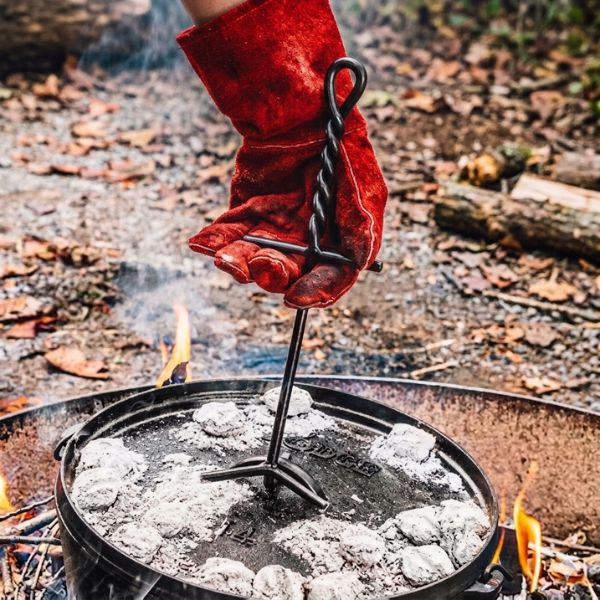 The History Behind Cast Iron Cookware: From 3rd Century China to the American Frontier
Humans have been cooking with cast iron cookware since it was invented in 3rd century China. These pots have evolved a lot over the centuries. In 17th century Netherlands, legs were put on the bottom of pots to allow coals from the fire to burn more easily. These pots were cast in sand molds. In 1707 English ironmonger, Abraham Darby, refined and patented this method making the cookware more cost effective to produce. This significant renovation allowed more people to afford quality durable pots and pans. They quickly became a staple in kitchens, both old and new world. They were coated with vegetable oils and baked until the oil turned to carbon. The carbon layer made non-stick long before Teflon was invented.
Discovering Camp Dutch Oven Cooking
Before moving to Florida, I worked in outdoor education at a place that is now called the Ashokan Center. Located in the Catskills of New York, this center provides auxiliary education experiences for students, 4th through 5th grade. Schools would bring them to stay in our bunk houses. The most popular classes we taught involved early 19th century life and trade skills (Blacksmithing, broom making, cooking, etc.) I brought this part of my past up because this job introduced cast iron cooking to me. Often, we would do what is called “living history” where we would dress up in period clothing and play a role of someone from the early 1800’s.
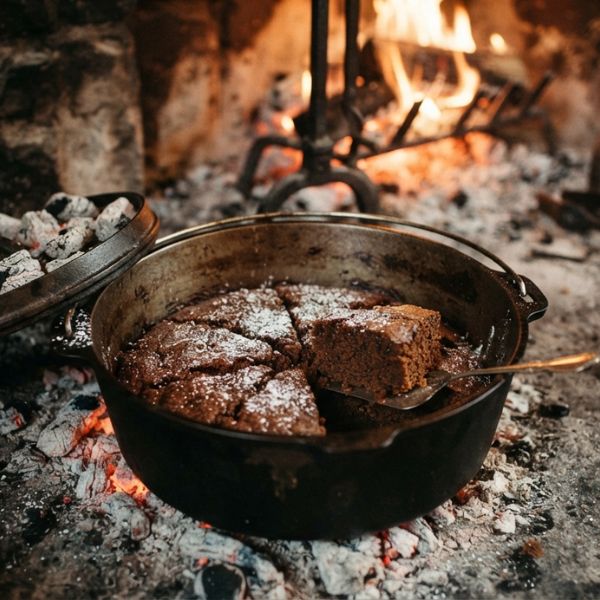
This method immersed the students into the life of people who experienced the world quite differently from them. A popular thing for them was to cook in those legged pots mentioned earlier. They are referred to as “Dutch Ovens” and expand the realm of cooking soups and stews to include baking. The children loved this because the lesson always ended in having a treat. Usually, we baked gingerbread, but during apple cider season included cobbler. They were amazed that such food could be created in a wood fire.
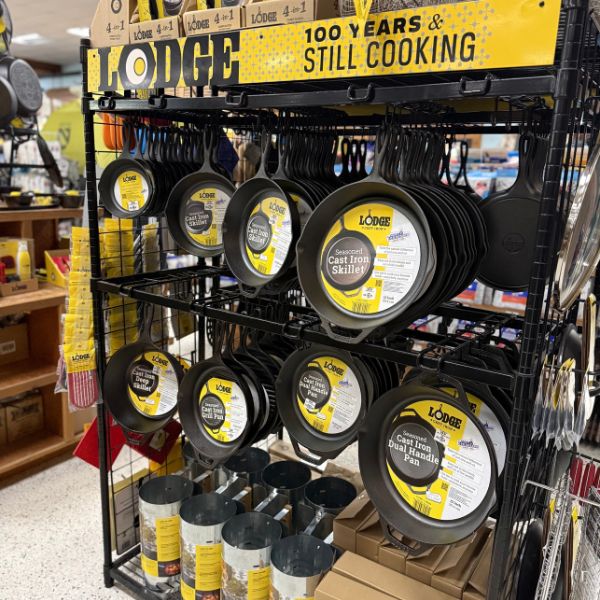 Why Choose Cast Iron? Health Benefits & Heat Retention
I mentioned the non-stick qualities of cast iron. This is more than a layer of carbon. It is a polymerization of carbon, hydrogen and oxygen formed from the oils being heated. The process is called “seasoning the cast iron.”
This is special because it does not contain harmful chemicals like Teflon. Off gassing from Teflon during use has been known to be harmful to certain pets. Thus, cast iron is your healthy alternative.
The other reason it is special is its ability to retain heat. This avoids hot spots which are common among other materials like aluminum. Heat retention cooks more evenly and is handy for keeping food warm after being removed from the fire.
Versatility: Cooking Over Campfires, Stovetops & Ovens
As kitchens moved away from cooking over fires. Cast iron skillets and pots without legs became popular. In my family, cornbread is cooked in a cast iron skillet placed in the oven. They are heavier than other cookware so they will never become popular with backpackers. But for those who car-camp, they bring a novel experience to campground cuisine.
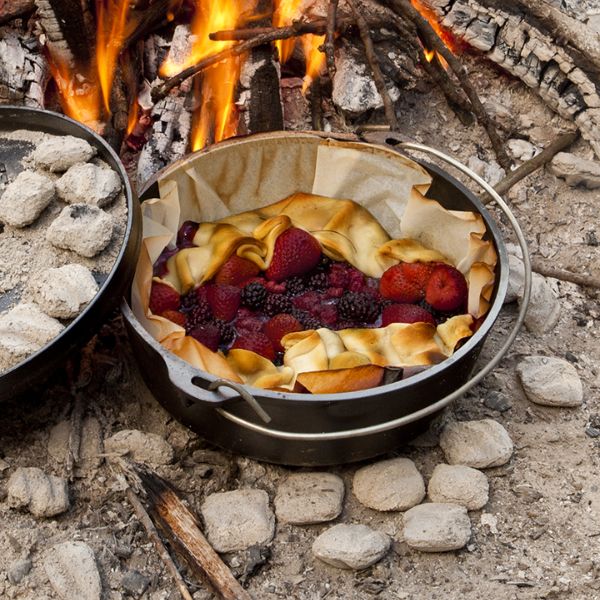 What is a Camp Dutch Oven? Essential Features for Outdoor Cooking
Camp Dutch Ovens are specifically designed to be used in a fire. Not so much open flame but hot coals created after the wood has burnt for a while. Camp ovens have the following characteristics:
Integral Legs: Three sturdy legs on the bottom elevate the oven directly over hot charcoal or wood coals, preventing it from smothering the fire.
A Flanged Lid: The lid has a raised ridge around the edge designed to hold burning coals securely on top. This allows heat to be applied from both top and bottom for baking.
A Wire Bail Handle: This heavy-duty handle allows you to hang the pot over a tripod or safely lift it from the flames.
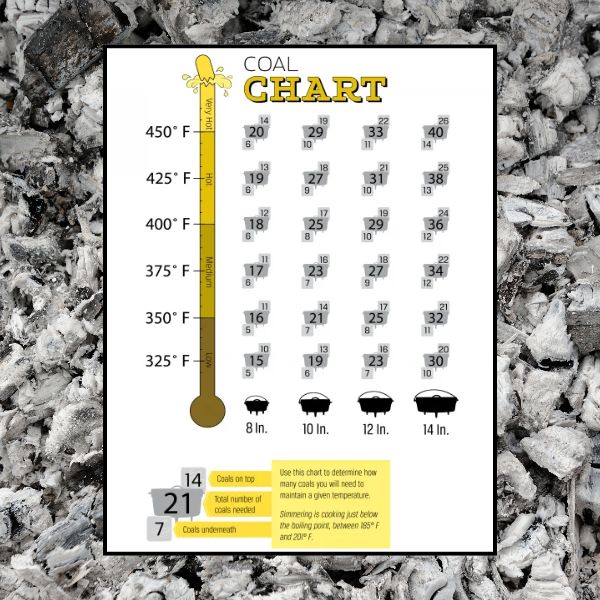
Cooking with a camp Dutch oven allows you to bake, roast, fry, and stew miles away from electricity. By placing coals both beneath the pot and on top of the lid, you create true three-dimensional radiant heat. It acts exactly like your home oven. Want to bake peach cobbler, a loaf of cornbread or chicken and dumplings at a campsite? Simply manage your coal ratio, usually twice as many coals on top as on the bottom for baking. You can achieve a perfect, golden crust every time. See chart below for approximate temperatures to pair up with your favorite recipes.
 Essential Cast Iron Accessories for Camp Cooking
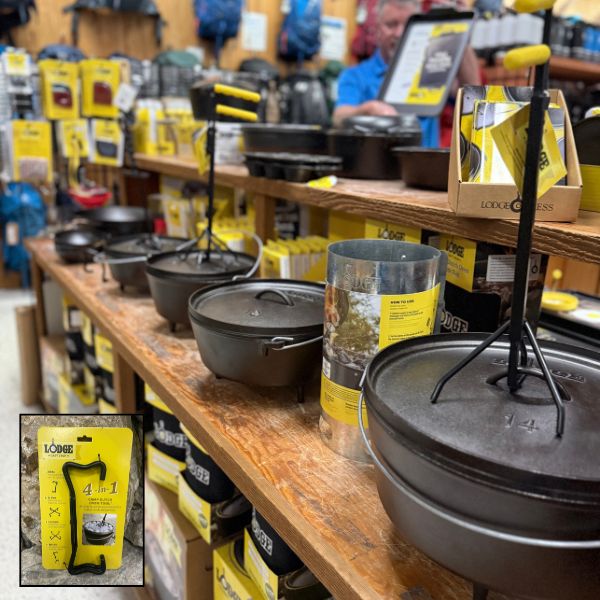
Lid Stand: Gives you a place to put your lid without spilling coals off the top or getting it dirty. It’s also handy to provide space for coals under cookware that don’t have legs like skillets. Camp Oven lids can be turned upside down on these stands and used as a flat griddle.
Lid Lifter: Long handled tool to lift lids off the pot without having to bend over.
Parchment liners: These liners help reduce cleanup.
Cast Iron Serving Bowls: Serving bowls that can be heated up to keep food warm after removing from the oven, pot or skillet.
How to Clean, Dry & Season Cast Iron Cookware
The fear of maintaining cast iron keeps many people from trying it, but the rules are simple:
Clean it promptly: Wash your pan with warm water. Gentle dish soap is perfectly fine and will not strip a seasoned layer. Avoid scratching off the seasoned layer. I sometimes use salt as a gentle abrasive.
Dry it completely: Never let cast iron air dry, or it will rust. Dry it thoroughly with a towel or place it over a low burner for a minute to evaporate remaining moisture.
Oil it lightly: Before storage, rub a microscopic layer of neutral oil (like canola or grapeseed oil) all over the cooking surface.
Lodge Cast Iron at Bill Jackson’s
Florida’s camping scene is built for cast iron. Whether you are setting up at a Gulf Coast state park, a freshwater lake campsite in the interior, or a weekend spot along the Withlacoochee or Ocala trails, a camp Dutch oven travels as well as any gear in your kit. The ability to bake, roast, and stew over coals means you are not limited to hot dogs and foil packets. Florida’s year-round camping season also means you get more chances to build your Dutch oven skills than most of the country.
If you are new to camp cooking or looking to upgrade your setup, stop by Bill Jackson’s Shop For Adventure at 9501 US Highway 19 N, Pinellas Park, FL 33782, or call us at (727) 576-4169. Our camping team can help you choose the right Lodge skillet or Dutch oven size for the kind of camping you do, whether that is a weekend at Hillsborough River State Park or a longer backcountry trip.
Happy Adventures and Bon Appetit!
 Frequently Asked Questions About Cast Iron Cookware
Q: Is it healthy to cook with cast iron?
A: Cast iron is one of the healthier cookware options available. Unlike non-stick coatings such as Teflon, cast iron’s non-stick surface comes from a natural polymerization of oils, carbon, hydrogen, and oxygen, a process called seasoning. There are no synthetic chemical coatings to off gas during cooking, which makes it a safer choice for households with birds or other pets that are sensitive to Teflon fumes. If you want to explore cast iron options in person, visit us and our camping team can walk you through what we carry.
Q: What brand is the best cast iron cookware?
A: Lodge Cast Iron is widely regarded as the benchmark for quality American-made cast iron. Lodge cookware comes pre-seasoned, is built to last a lifetime, and is available across a full range of skillets, camp Dutch ovens, and accessories. Bill Jackson’s is a long-standing authorized Lodge dealer, so you can find their full lineup in our camping department and get hands-on guidance from staff who cook with this gear.
Q: What happens if my cast iron pot starts to rust?
A: Simply clean off the rust and re-season it.
- Wash and dry the pan.
- Apply vegetable oil.
- Bake for an hour at 450 to 500 degrees.
Q: Is it bad to use soap on cast iron?
A: Gentle dish soap is okay. Avoid harsh detergents. Sometime all that is needed to clean after certain types of food is water.
Q: Why does my food stick to my cast iron pan?
A: This is often because of improper preheating or cooking on too high a temperature. Be sure the pan is hot before adding food. Do not crank up the heat. Cast iron retains heat and can easily get too hot.
Q: What cannot be cooked in cast iron?
A: Most foods cook beautifully in cast iron, but acidic foods require some caution. Long-simmering dishes like tomato sauce or citrus-based recipes can gradually strip the seasoned layer from a pan, especially if the seasoning is not well established. Short cooking times with acidic ingredients in a well-seasoned pan are generally fine. If you notice your seasoning thinning after cooking acidic foods, simply re-season the pan before your next use.
Q: Where can I find recipes that can be cooked in cast iron?
A: Anything can be cooked in cast iron. Perhaps recipes you already have. You can find many on the internet. Try Cast Iron Recipes.
Q: I don’t have much room in the fire ring, but I have more than one camp oven. What do I do?
A: Ovens can be stacked using the coals on the lid below to heat the bottom. Stack largest to smallest like a pyramid.
Q: Do I have to use vegetable oil to season the cookware?
A: Using meat-based oils can be done but can turn sticky and rancid. It is just best to use vegetable oil or shortening.
Q: Why did we stop using cast iron?
A: Cast iron fell out of everyday use largely because of weight and the rise of lighter, easier-care alternatives like aluminum and Teflon-coated non-stick pans. As kitchens modernized and cooking moved away from open fires and wood stoves, the convenience of lighter cookware won out for many households. Cast iron has seen a strong revival in recent years as cooks have become more aware of the health concerns around synthetic non-stick coatings and the durability advantages of cookware that can last generations.

9501 US Highway 19 N
Pinellas Park, FL 33782
727-576-4169
Store Hours
Mon-Fri 10 a.m.-6 p.m.
Sat 9:30 a.m.-6 p.m.
Sun 10 a.m.-5 p.m.
